You Are the Coordinator
Somewhere around your third parallel agent, the feeling arrives. Branches you half remember. A worktree you cannot place. Two agents that both claim they finished, and a diff that says otherwise. It feels like chaos, because it is.
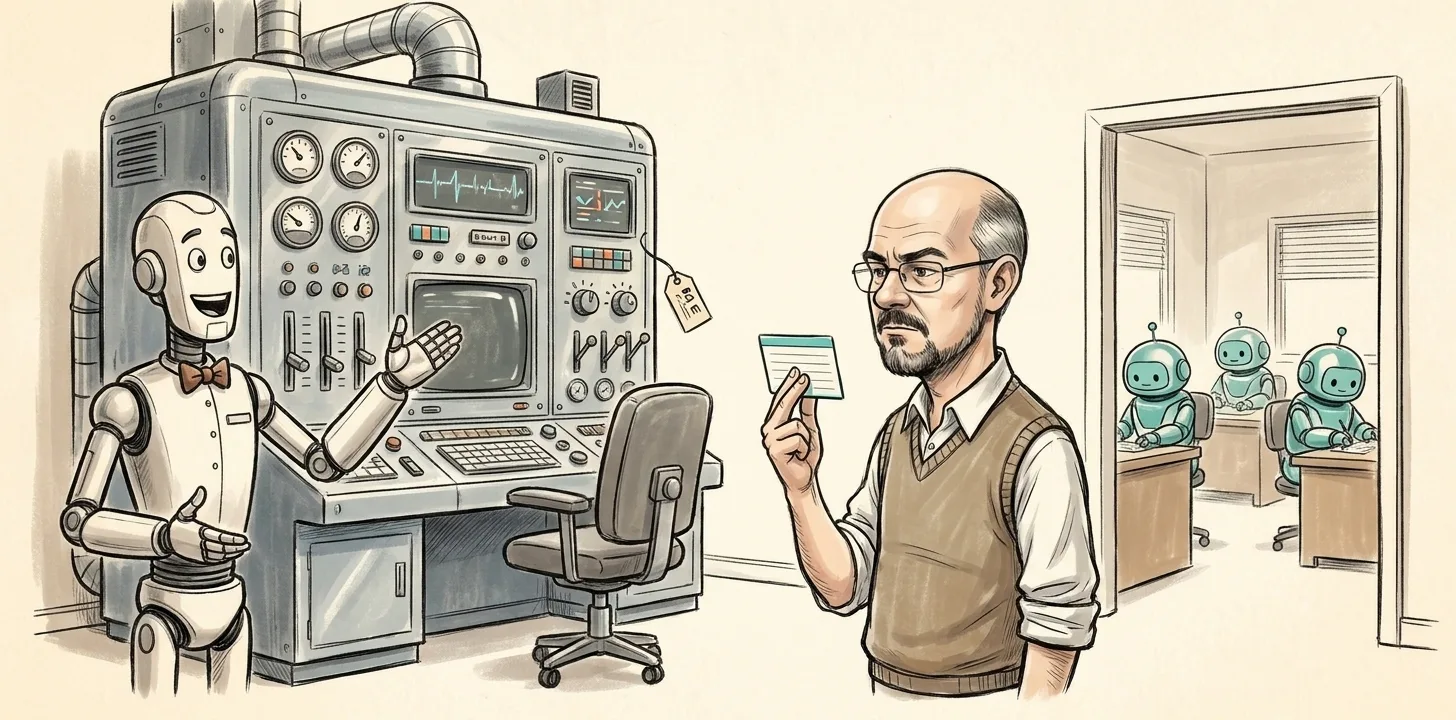
Then you open the feed, and the feed has a product for that feeling. A fleet orchestrator. An agent manager with persistent identities. A control plane with a mayor process and a work ledger and a dashboard that looks like NASA. The demos are genuinely impressive. The pitch writes itself: your agents are tangling, so buy the coordination layer.
This is the closing argument of this series, so I will make it plainly. The tools are real. The chaos is real. And the purchase is still wrong, for a reason the best of these tools states on its own tin.
The Machine Is Real
The lazy version of this essay sneers at the machine. It does not deserve a sneer.
Gas Town is Steve Yegge's agent-fleet orchestrator, open-sourced on New Year's Day. Yegge spent two decades at Amazon and Google. The system runs twenty to thirty coding agents at once, and it solves the problems that actually appear at that scale: durable memory across sessions, handoffs when an agent dies mid-task, parallel workers that do not stomp each other, a persistent ledger of what got done and what did not. Since January it has only grown up the stack. There is now an SDK layer built to run hundreds of concurrent agents, a federation layer that links separate installations into a trust network, and a hosted version through a commercial partner. It burns money the way a fleet should. Its fans call it a token furnace and run it on multiple max-tier subscriptions.
This is serious engineering by a serious engineer. It is not slop, and it is not hype.
Now the part everyone skips. Yegge gates his own tool. His stated prerequisite is that you should already be hand-managing ten or more agents before Gas Town is even worth considering. On his ladder of agent-wrangling skill, that is the second rung from the top. Below that line, his machine is not for you, and he is the one saying so.
Read that again, because it is the tell. The author of the most credible fleet orchestrator in the field is telling you exactly when you need it. When the pain of hand-managing a double-digit fleet is a pain you personally have. Tool authors who respect you tell you the operating conditions. The feed selling you the tool does not.
The Census
So take the census. How many agents are you actually running? Not aspirationally. Today.
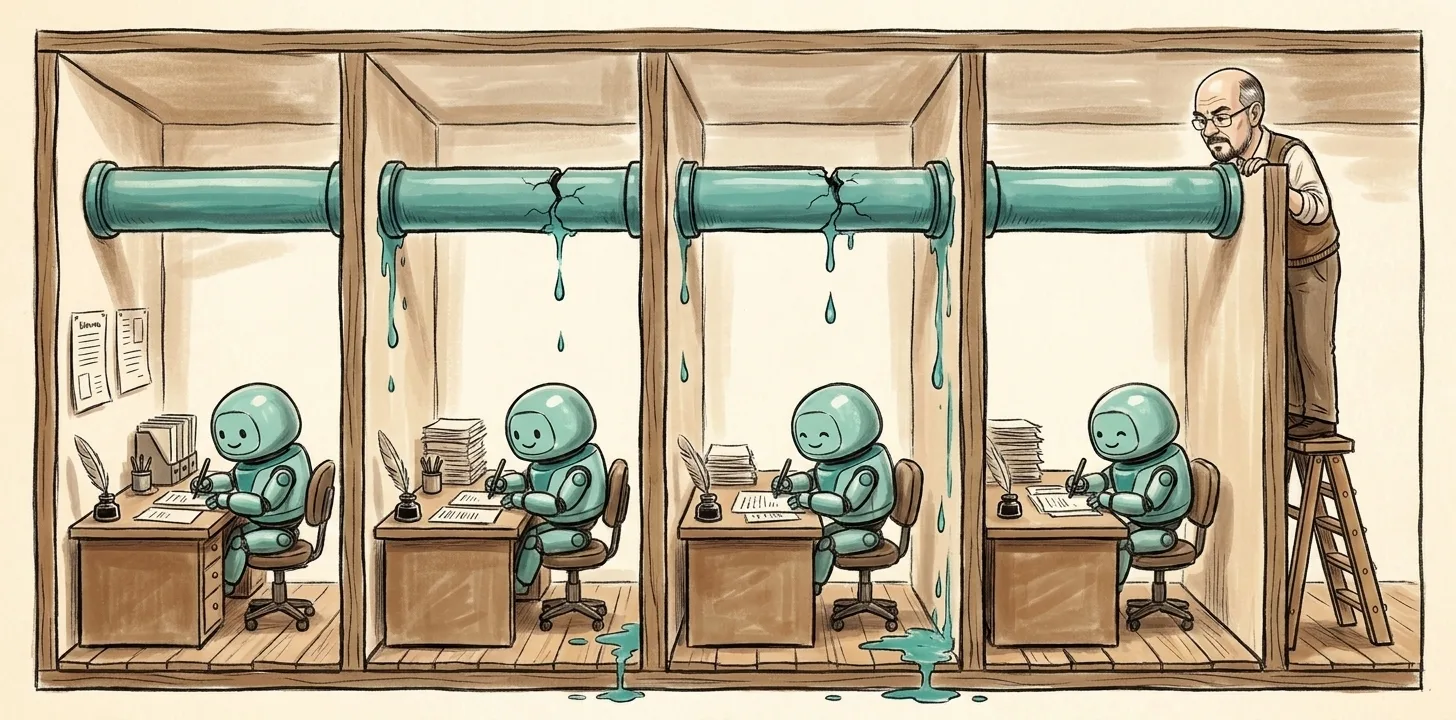
Two to five. That is the honest number for almost everyone reading this, including the people posting the NASA dashboards. And at two to five agents, the chaos you feel is not the chaos a control plane prevents. I have watched small-swarm failures all year. They are always the same four:
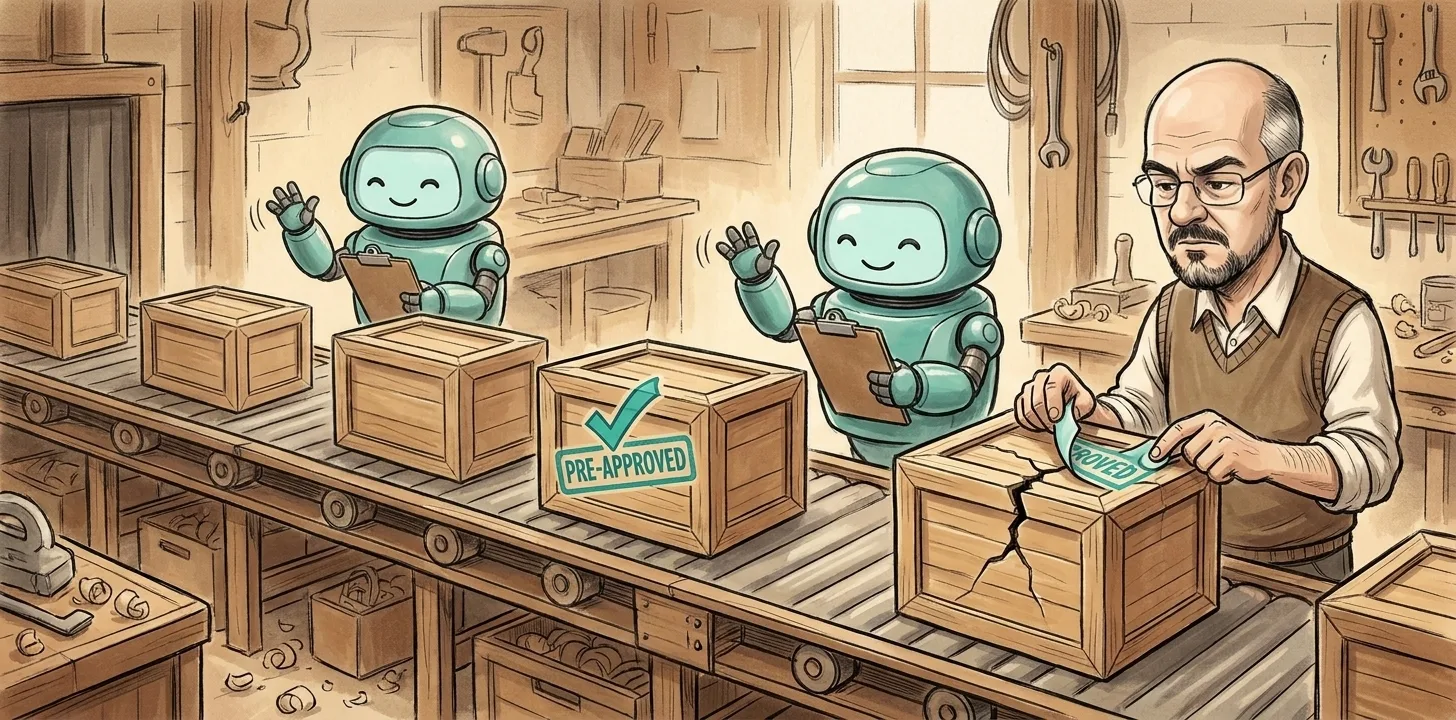
Two agents on one HEAD, welding commits onto each other's work. Dispatch with no partition, so two agents rewrite the same file from different specs. Branches nobody lands, piling up like unread mail until one gets force-deleted with the only copy of the fix. And the word "done" taken on faith, unverified, three directories away from the evidence.
Not one of these is a coordination-infrastructure problem. Every one is a coordination-discipline problem. A control plane exists to solve fleet problems: session handoffs across dozens of workers, agents you have literally forgotten exist, a backlog too large for one head to hold. You do not have those problems. You have shared mutable state and nobody enforcing ownership.
Which makes the purchase absurd. You are buying a coordination system to manage a problem you created by not coordinating. It is hiring a program-management office because two people keep overwriting the same document. The failures the orchestrator prevents are not the failures you are having, so after the install you will have the same four failures, plus a config directory.
The Right-Sizing Rule
Here is the rule, and it applies to every heavy tool, not just this category.
Reach for the heavy tool only when you can name the heavy problem it solves. In your own project's terms. This week. Written down.
"It feels chaotic" is not a named problem. It is a mood. "I am running twelve agents and I forget which ones exist between sessions" is a named problem, and it is precisely the problem Gas Town's author built Gas Town to solve, at precisely the scale he tells you it applies. If you can write the sentence, buy the machine. If you cannot, the mood is telling you something cheaper: nobody is doing the coordination, and you were hoping software would volunteer.
Second reason to demand the named problem: the category churns. Since July the company behind one of the popular agent-board tools shut down and handed the project to its community. A major research framework got frozen into a corporate merger. A big vendor is retiring its visual agent builder this fall. The tools that survive a gold rush are the ones bolted to a problem someone could name. Adopt without a named problem and you are not buying infrastructure. You are adopting a dependency with a one-quarter half-life.
What Works Below Fleet Scale
What does a two-to-five-agent shop actually need? Four things, and three of them are free.
A written doctrine. The rules of your repo, in a file every agent inherits at spawn. One writer per worktree per branch. Partition before dispatch. One lander. Receipts before "done." I wrote up my whole card in the three-agents post, and it has held for months without a single new tool.
Worktree isolation. Git ships it. Every orchestrator on the market, Gas Town included, standardized on git worktrees as its isolation primitive this year. The industry looked for the right mechanism and found it already sitting in your repo. The heavy tools are wrapping the thing you already have.
A single lander. Integration is serialized and has one owner. That owner is you, not a merge queue you cannot inspect.
And at most, a light worktree dashboard. There is a whole class of these now. Conductor, Claude Squad, Nimbalyst, and their cousins. Thin, mostly free, and useful for exactly one thing: seeing your worktrees and sessions in one place instead of eight terminal tabs. Take the visibility. Refuse the management. The moment a tool wants to decide what runs next, it has applied for a job it cannot do.
Because here is the load-bearing fact. The decisions that tangle a small swarm are partition, sequencing, integration, and trust. Which work is separable. Which change must land before which. Whose branch merges first and who rebases. Which "done" you believe without checking. Those are judgment calls about your codebase, your risk, your week. Software can schedule tasks. It cannot judge them. At fleet scale you accept worse judgment in bulk as the price of throughput. At five agents, the judgment is the whole job, and the job has your name on it.
The Chair
Which brings me to what this series has been about since the first tangle.
You are the manager now. The AI took the typing. It did not take the decomposition, the verification, or the integration, and those were always the parts that mattered. When you run agents in parallel, those duties concentrate into a role, and the role has a name: coordinator. An orchestrator does not fill that chair. It cannot. Install one below fleet scale and you have not delegated the coordination. You have added one more report, the most confident one on the team, and it needs managing too.
A swarm is a distributed system, and every distributed system that works has an adult in the room who decides what is true. Nothing you can install is that adult. Either you sit in the chair or it is empty.
So here is what I want from you, and it is not agreement. The next time your setup feels chaotic and your cursor is hovering over some orchestrator's install command, stop and write one sentence first: the heavy problem this tool solves, in your project's terms, dated this week. If you fill the line, install it with my blessing, and tell me what the problem was. I mean that. I keep a file of named problems, and it is thin. But if the line stays blank, close the tab. You just found out the coordinator position is open, and you are the only candidate.
Further Reading
- A Swarm Is a Distributed System, Not a Team: why parallel agents tangle by physics, not bad luck. The problem this whole series names.
- How I Run Three Agents Without Losing My Mind: the index card. The actual rules this essay tells you to run instead of the machine.
- Five Agents Built It on the Wrong Branch: what unpartitioned dispatch costs, in one afternoon.
- It Said Done, and Deleted the Branch: the price of taking "done" on faith, which no orchestrator refunds.
- All My Bugs Came From My Own Prose: the spec side of the coordinator job, because dispatch quality is set before the first agent spawns.
- The Review Altitude Above the Diff: the verification side, reviewing what the change means instead of what it says.

No comments yet